
VTOL Drones and Why India Quietly Depends on Them More Than We Admit
December 22, 2025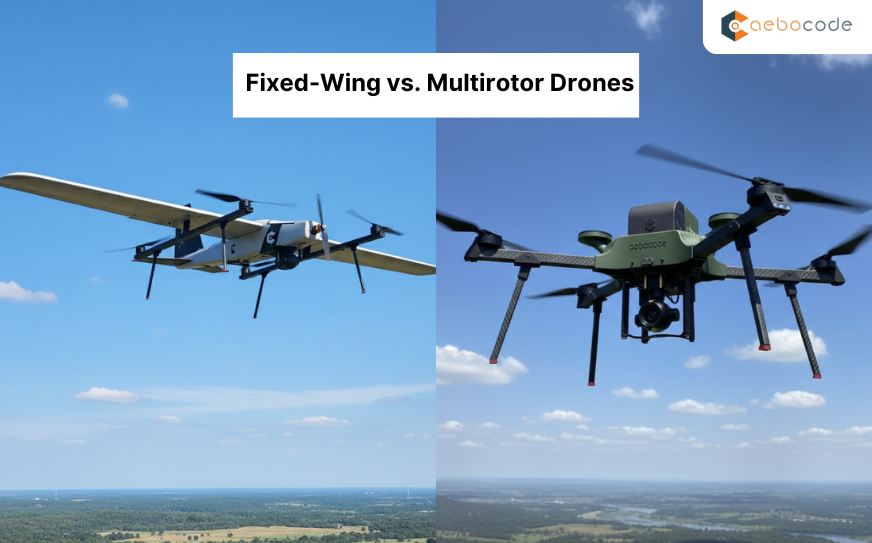
Fixed-Wing Versus Multirotor Drones in India: What Really Works?
India is so geographically diverse – right from mountains to the densely populated urban area and large farming lands, it possesses all of this and more. It creates an entirely different set of challenges and opportunities for drone technology. We all know that the drone market in India is exploding at an extraordinary rate. That gives rise to an imperative question that arises for the business community, researchers, and governmental bodies. What is the apt drone type – fixed wing and multirotor – for certain tasks in the Indian environment itself? Both have their strong and weak points. Both are dependent mainly on mission requirements.
Multirotor Drones in India: The Agile Workhorse
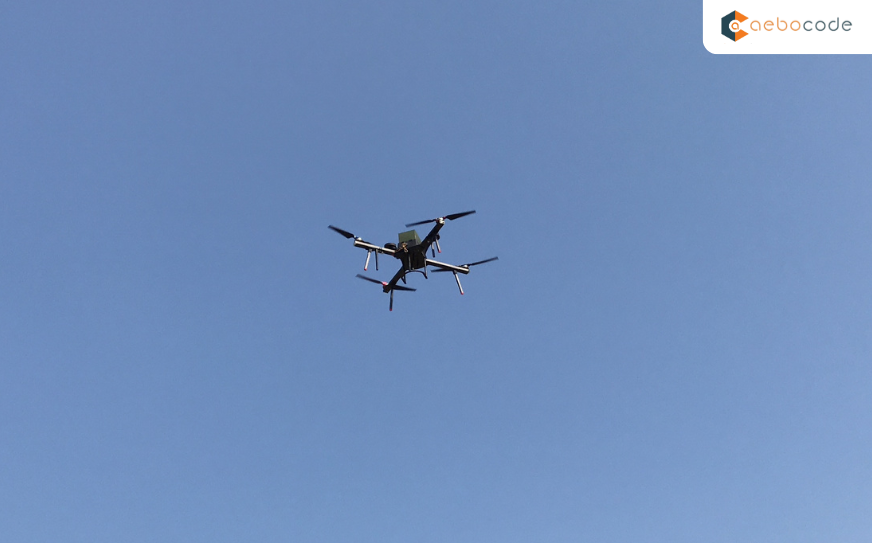
When you think about drones, multirotor drones are probably what come closest to your imagination. Quadcopters, hexacopters, and octocopters are some of the several types of multirotor drones. In recent years, these sorts of drones have conquered the consumer market, though they are increasingly important in commercial sectors too. There are many drone manufacturing companies in India.
Also Read: Made in India Drone Industries — An Industry Guide
Advantages of Multirotor Drones:
VTOLThis probably is their biggest advantage, more so around populated areas. Lack of clear runways, multirotors take off and land in tight spaces, hence very useful in urban inspections, search and rescue operations, and delivering items in crowded settings.
Hovering capability:
To stay precisely in a position is important for detailed inspections of structures, power lines, or crops. In such a case, they would be ideal for photogrammetry, small-area surveying, and very detailed optical data acquisition.
Agility:
Multirotors are very maneuverable, and can move with considerable ease around complicated environments. This is very important for all tasks whose aim it is to fly very close to objects, Indoor inspection flights, or flights over forests.
Ease of Use:
Generally, multirotor drones are pretty straightforward and easy to learn and handle. Their intuitive controls kindle a wide range of users. This has contributed to their expanded applications in different types of tasks.
Payload flexibility:
Even though they are typically flown with much lighter payloads than fixed-wing drones, multirotors can support a wide range of sensors, including cameras like RGB, thermal, and multispectral, but also small delivery mechanisms.
Also Read: The Rise of Kamikaze Drones in Modern Battlefields
Disadvantages of Multirotor Drones:
Limited Endurance and Range:
This is their major shortcoming. Because of the constant power needed to overcome gravity and generate lift, multirotors generally have shorter endurance and limited range than fixed-wing UAVs. This translates to higher recharge requirements and shorter operation times when operating in larger areas.
Lower Speed:
They are expected to be slower than other types of vehicles as their maximum speed will be lower, which results in the efficiency of covering long distances being lower
Wind Sensitivity:
Although multi-rotors have shown an improved stability performance in wind conditions compared to the previous models, they still tend to be more sensitive to strong wind compared to fixed rotors.
Applications in the Indian Context:
Urban Surveillance and Security: The monitoring of events, crowd control, and assisting law enforcement in the cities.
Infrastructure Inspection: conducting inspections of bridges, buildings, cell towers, and power lines in areas that are very congested or otherwise difficult to reach.
Precision Farming: Spot spraying, crop health monitoring in smaller, intricate fields, and site-specific data gathering.Disaster Management-specialized search and rescue operations in areas affected by floods or earthquakes, providing immediate aerial views.
Logistics Last-Mile Delivery: Various new emerging use-cases for delivering small packages in urban or semi-urban areas.
Filming and Photography: The capacity to hover steadily and maneuver makes them quite ideal for quality aerial photography and filming.
Fixed-Wing Drones in India: The Endurance Champion
Fixed-wing drones have a miniature airplane design that produces wings to push through the air to get the lift needed. Of course, there is a radical difference in capabilities.
Benefits of Fixed Wing Drones:
Increased Endurance and Range: This is their identifying attribute. The fact that they are able to generate lift aerodynamically makes them energy efficient. This makes them fly for a long time and travel long distances in just one charge or fill of fuel. This proves to be extremely helpful while undertaking large-scale mapping and surveillance missions.
Speed: The fixed wing drone flies faster compared to the multirotor drone. It is able to cover larger regions in a short period.
Increased Payload Capacity (in many cases): Not all drones possess this feature, but fixed-wing drones possess the capacity to carry heavier payloads and can perform these over longer distances, thus they can be used for more delicate tasks.
Wind Resistance: These drones are quite stable in the presence of high wind once they are flying. However, they offer stable flight routes as well as data.
Efficiency in Large Area Mapping: They are the undisputed champions when it comes to large area mapping tasks, range mapping, and persistent surveillance due to their speed and stamina.
Disadvantages of Fixed Wing UAVs:
Requires Launch and Recovery Area: Fixed-wing UAVs can never be likened to multi-rotor drones regarding landing and takeoff, as fixed-wing drones require a clear area for landing and takeoff, which may be an airstrip, even for catapult-launched fixed-wing drones, or a recovery net/parachute. Fixed-wing drones, also known as “mini-airplanes,” use the forward motion of their wings created by airflow to produce lift. Such a basic difference translates to a completely different set of capabilities.
Lack of Hovering Ability: They lack the ability to hover over a region, which means that these robots are not preferred for detailed observations.
Less Agile: Fixed-wing drones are less agile and less capable of navigating complex routes or tight spaces compared to multi-rotor drones.
Generally More Complex to Fly: Flying a fixed-wing UAV may require more skill, especially in more complex missions.
Higher Initial Cost (occasionally): Some of the most sophisticated fixed-wing drones, especially those that have ranges and sensing abilities, might involve a higher initial cost.
The Application of Concepts in an Indian Scenario
Large-Scale Mapping and Surveying: Large-scale mapping is required for urban planning, updating land boundaries, and infrastructure development works like the construction of roads, railroads, and pipelines.
Precision Agriculture (Large Farms): Monitoring data on large farming areas related to crop conditions, irrigations, and harvest forecasts.
Forestry & Wildlife Management: Forest disease monitoring, animal tracking, and poaching protection for large nature reserves.
Environment Monitoring : It involves information related to the tracking of changes occurring in land use, water resources, and levels of pollution over a wide geographic region.
Mining and Quarry Operations: Mining and quarry operations involve surveying mine sites for volume surveys.
Hybrid VTOL Drones: The Way Forward
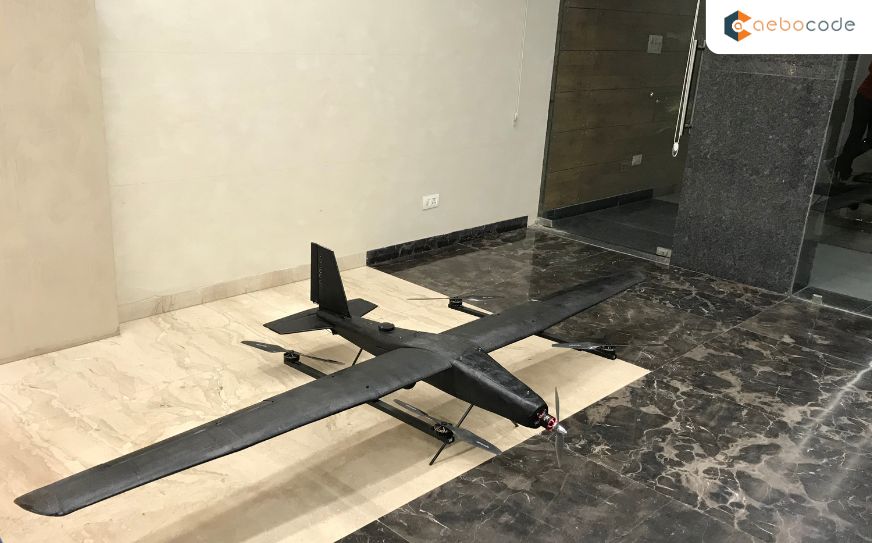
Noticing the shortcomings of both platforms, VTOL Fixed-Wing (or Hybrid VTOL) drones are increasingly being adopted. These platforms allow a drone to use the vertical takeoff and landing capabilities of a fixed wing drone and then use the horizontal flight of a fixed wing drone to fly forward. Such a platform gets the benefits of both worlds.Although complex and costlier, the hybrid VTOL drones hold a lot of interest in the Indian variant, where both long range and small space missions are needed. Also read Hybrid VTOL Drones in India – What the Future of Aviation and Technology Has to Offer.
Unmanned Aerial Vehicle Manufacturers in India
“Make in India” has assisted in increasing local production of drones. There are several companies in India at the forefront of developing multirotor drones as well as fixed-wing drones, catering to local demand. These local drone manufacturing firms in India target innovation in various domains, ranging from agricultural purposes to military applications. These players include:
Garuda Aerospace: Known for a wide variety of drones, especially in the areas of agriculture and enterprise.
IdeaForge Technology: A major defense and security firm, and now entering the civil market.
RattanIndia Enterprises (NeoSky India): Engages in drone production and ancillary services.
Drone Destination: Provides drone pilots and services, and has ventured into manufacturing.
IndiCopter: Focuses on heavy-lift drone
AeroVironment (with local partnerships): Although a world leader in this segment, the company has its presence and partnerships in the Indian market.
Many start-ups: There appears to be a rising start-up ecosystem that focuses on the development of fixed wing drones, as well as multi-rotor solutions for specific usages in India .These firms not only make drones, but they either produce critical software, data analytics platforms, or offer drone as a Service (DaaS) solutions, which are collectively boosting the drone ecosystem.
What Really Works in the Indian Context?
The response, therefore, is not “either/or” but rather the intelligent use and, inevitably, the integration of technologies: In intricate, localized tasks in urban settings or challenging terrains: Quads in India are simply the best. They are multi-rotor drones. They are vital in inspection work on intricate infrastructures, emergency responses in densely populated settings, as well as in the administration of precise agriculture inputs in small farming settings. For large scale missions and long endurance missions over vast open areas: The fixed-wing drones in India provide unparalleled efficiency and economy of operation. These drones play a pivotal role in mapping large chunks of geographical territories, securing long pipelines, or protecting long borders.
For situations requiring flexibility as well as stamina: Hybrid VTOL drones have been found to be the best option, even though it involves more expense. With technology improving and costs declining, such drones might become common in the future. Ultimately, effective utilization of drone systems in India needs an understanding of the environment and the desired outcome of drone data. Organizations can seek consultations from experienced drone manufacturers in India to make an informed decision on the appropriate use of a drone for a particular task with a focus on achieving efficiency and objectives. Indeed, a diversified future of drone systems in India is awaiting with both fixed wing and multirotor drones offering their important roles for progress in India.
Frequently Asked Questions (FAQs)
1. What are the advantages of a VTOL drone over a conventional quadcopter for long-range operations?
Although quadcopters or multirotors perform beautifully when flying or snapping pictures, they drain enormous amounts of battery life just to keep flying. A VTOL aircraft changes flight configuration to “fixed-wing” as soon as it takes off, so that it can use its wings to provide lift. This allows the aircraft to fly 10 times farther than a quadcopter.
2. Do I require a runway to fly my VTOL drone in the mountains?
No, and that is its greatest strength. Also, unlike fixed-wing aircraft which need to have a runway that is at least 50 meters long, a VTOL drone can take off and land vertically from even an area that is 2×2 meters in size. It is ideal for terrains like the Himalayas or the Western Ghats, which are rugged and have uneven topography.
3. Is VTOL technology more expensive than traditional drone configurations?
The initial investment cost in VTOL drones is higher, since the controlling systems are complex. Yet, when it comes to industries like the surveying of pipelines that stretch over hundreds of kilometers, the medical supply chain, and other similar applications, the cost per kilometer performed is much lower, since VTOL drones fly longer before battery changeovers.
4. Performance of VTOL drones in unpredictable Indian weather.
VTOL drone systems are more stable than quadcopters when it comes to wind conditions. This is because their design helps them slice through the wind when they are flying horizontally. However, when a multirotor flies horizontally, it needs to pitch forward, which makes it vulnerable to strong wind gusts that are generally found in coastal or hilly areas of India.
5. What are the regulations governing the operation of industrial VTOL drones in India?
All types of industrial drones are required to adhere to The Drone Rules 2021. This includes registering the drone on the Digital Sky Platform to generate a Unique Identification Number (UIN), ensuring that the drone has “No Permission, No Takeoff” (NPNT) compliance, and being operated by a licensed remote pilot, especially in BVLOS flights.